

Anchoring Sustainable Development in the UNIDROIT–ICC Instrument on International Investment Contracts
A Defining Moment for Global Investment Governance
The global investment landscape is undergoing a period of profound transformation. As governments, corporations, and international organizations increasingly recognize the urgency of sustainable development, the frameworks governing international investment must evolve accordingly. Against this backdrop, the International Institute for the Unification of Private Law (UNIDROIT) and the International Chamber of Commerce (ICC) have introduced a draft Instrument on International Investment Contracts—an initiative that could significantly shape the future of cross-border investment practices.
This draft Instrument, now open for public consultation until September 15, 2026, represents a rare and critical opportunity for stakeholders worldwide to influence the development of a framework that may guide international investment contracts for years to come. The consultation phase marks the first time the draft has been exposed beyond the confines of the Working Group, making this a pivotal moment for inclusive and balanced input.
The Origins and Purpose of the UNIDROIT–ICC Initiative
The joint project between UNIDROIT and the ICC was launched in 2023 with a clear objective: to modernize and standardize international investment contracts through the development of principles and model clauses. These tools are intended to provide practical guidance to governments and investors navigating the increasingly complex terrain of international investment.
The initiative emerged in response to growing concerns that existing investment frameworks, particularly those rooted in traditional bilateral investment treaties, often fail to adequately reflect contemporary priorities such as sustainability, inclusiveness, and equitable development. By offering a flexible yet structured instrument, UNIDROIT and the ICC aim to bridge the gap between legal certainty and policy adaptability.
The first meeting of the Working Group took place in October 2023, bringing together experts from diverse legal, economic, and geographic backgrounds. Over the following years, the group developed a draft Instrument that seeks to balance investor protection with broader societal goals. However, until now, this process has largely taken place behind closed doors, making the current public consultation phase especially significant.
The Consultation Process: An Opportunity for Inclusive Participation
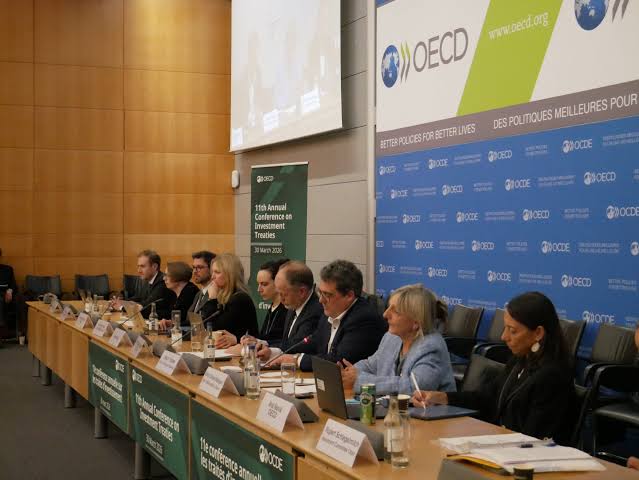
The public consultation, running from June 24 to September 15, 2026, spans a relatively short 12-week period. Despite its limited duration, it offers an invaluable opportunity for a wide range of stakeholders to contribute to the refinement of the draft Instrument. Governments, investors, civil society organizations, academics, legal practitioners, and project-affected communities are all encouraged to engage actively in this process.
Participation from developing and emerging economies is particularly crucial. These countries are often the primary users of international investment contracts and are disproportionately affected by their outcomes. Their perspectives can help ensure that the final Instrument reflects a more equitable balance of interests and addresses the specific challenges they face in negotiating and implementing investment agreements.
The International Institute for Sustainable Development has emphasized the importance of early and meaningful engagement, noting that the legitimacy and effectiveness of the final Instrument will depend heavily on the diversity and quality of input received during this phase.
Balancing Dual Objectives: Investment Promotion and Sustainable Development
One of the central challenges facing the draft Instrument is the need to reconcile its dual objectives. On the one hand, it seeks to promote and facilitate international investment by providing clear and predictable contractual frameworks. On the other hand, it aims to embed sustainable development principles into these frameworks, ensuring that investments contribute positively to economic, social, and environmental outcomes.
Achieving coherence between these objectives is no simple task. There is an inherent tension between the desire to protect investors and the need to preserve the regulatory autonomy of states. If not carefully managed, this tension could undermine the effectiveness of the Instrument or lead to unintended consequences.
The draft Instrument must therefore strike a delicate balance, ensuring that sustainability is not treated as a secondary or aspirational goal, but rather as a core and operational objective that informs all aspects of the contract.
From Aspirations to Implementation: Making Sustainability Operational
A key question raised by the draft Instrument is whether its sustainability provisions are truly actionable or merely symbolic. In many existing frameworks, sustainability is referenced in broad and aspirational terms, without clear mechanisms for implementation or enforcement. This can result in a gap between stated commitments and actual outcomes.
To address this issue, the final Instrument should include concrete provisions that translate sustainability goals into measurable obligations. This may involve integrating environmental standards, social safeguards, and governance requirements directly into contractual clauses, as well as establishing monitoring and accountability mechanisms.
Operationalizing sustainability also requires clarity in defining responsibilities. Both investors and host states must have clearly articulated roles, ensuring that obligations are shared fairly and that neither party bears a disproportionate burden.
Rethinking Investor Protection and the Right to Regulate
Another critical area of scrutiny concerns the standards of investor protection embedded in the draft Instrument. Traditional investment agreements often include broad and open-ended protections, such as fair and equitable treatment or protection against indirect expropriation. While these provisions are intended to provide legal certainty for investors, they can also constrain the ability of states to regulate in the public interest.
The draft Instrument presents an opportunity to rethink these standards and align them more closely with contemporary policy priorities. This includes ensuring that investor protections do not override the legitimate right of governments to enact regulations aimed at protecting public health, the environment, and social welfare.
A more balanced approach would involve clearly defining the scope and limits of investor protections, while explicitly safeguarding the regulatory space of states. This is particularly important for developing countries, which may face greater pressures and constraints in managing the impacts of foreign investment.
Toward a More Equitable Framework for International Investment
At its core, the UNIDROIT–ICC draft Instrument has the potential to redefine the principles governing international investment contracts. By embedding sustainability as a central objective and promoting a more equitable distribution of rights and obligations, it can contribute to a more inclusive and responsible model of global investment.
However, realizing this potential will require careful revision and broad-based input. The current consultation phase is not merely a procedural step, but a substantive opportunity to shape the future of international investment governance.
The Urgency of Engagement
The release of the draft Instrument marks a significant milestone in the evolution of international investment law. Yet its ultimate impact will depend on the extent to which it reflects the diverse needs and perspectives of its stakeholders.
For governments, investors, civil society, and academics—especially those from developing and emerging economies—this is a moment that demands attention and action. The window for consultation is limited, but the implications are far-reaching.
Engaging in this process is not only an opportunity to influence a single legal instrument, but also a chance to contribute to a broader shift toward sustainable, equitable, and forward-looking investment practices. In a world facing complex global challenges, anchoring sustainable development at the heart of international investment is not just desirable—it is essential.